
27 Interesting Facts About Diamonds You Probably Didn’t Know
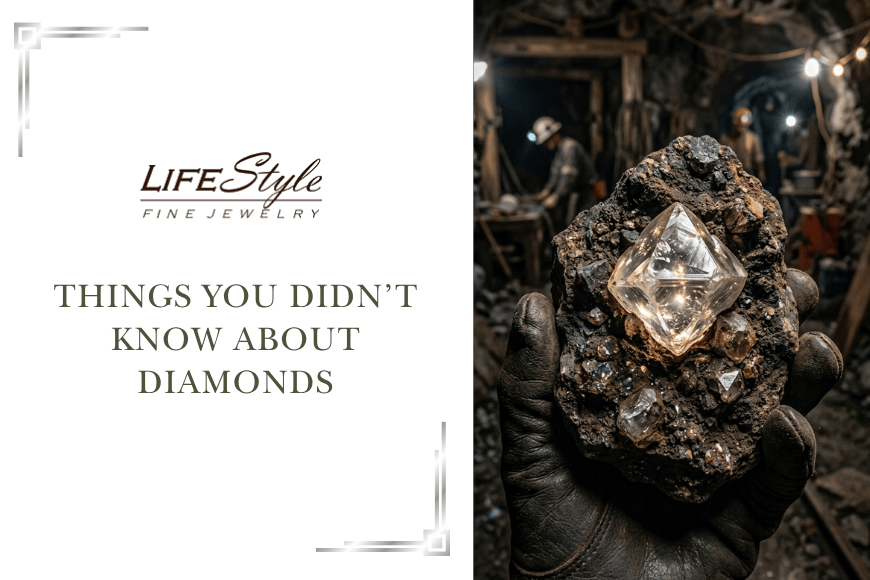
You might be surprised to know that the diamonds you’re wearing could be older than life on Earth. In fact, many of them date back to the pre-dinosaur era.
Most people admire diamonds, but very few know their incredible stories. The older a person or an object is, the more stories it carries. Just think about your grandparents, or any elderly person for that matter. They have countless interesting stories that can truly amaze you.
Diamonds carry many stories, too. Of course, we can’t hear them directly from the diamonds (for obvious reasons!). But thanks to technological advances, humans have discovered many interesting facts about diamonds over the years.
In this article, we’ll take you through some fascinating diamond facts that you may have never heard before. And if you already own a diamond, these facts might make you appreciate it even more.
Top 27 Interesting Facts About Diamonds That Will Blow You Away
A lot of research and effort went into collecting and consolidating all the interesting information on diamonds. We believe that the following list will cover all the amazing facts about diamonds that you didn’t know were even possible.
1. Many Diamonds Are Older Than Dinosaurs
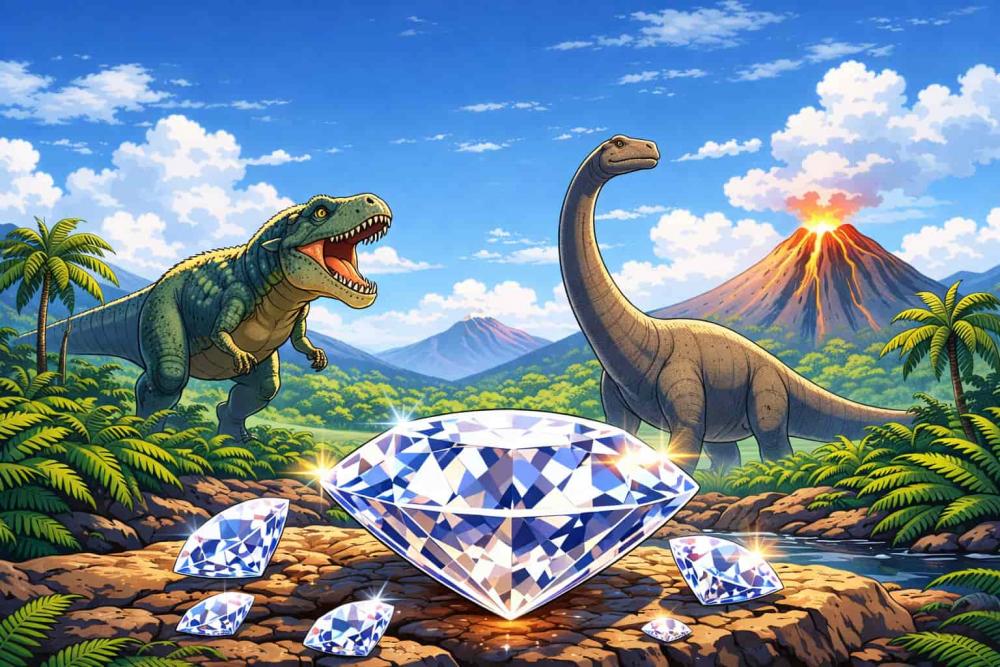
You might know that dinosaurs appeared on Earth around 230 million years ago. What’s even more fascinating to know is that the natural diamonds are much older than that. Scientists believe most diamonds formed between 1 and 3.5 billion years ago when the Earth was at its tender age.
Researchers were able to find the age of diamonds by studying tiny mineral particles that got trapped inside them. These particles act like time capsules from deep inside the planet.
So, just remember that, next time when you’re wearing a natural diamond, you may actually be wearing one of the rarest and oldest materials on Earth.
2. Most Diamonds Formed 1 to 3.5 Billion Years Ago
Based on the archeological findings, many diamonds formed during the Archean Eon. It’s a geological period that lasted from about 4 billion to 2.5 billion years ago.
Interestingly, some diamonds found in northern Canada formed more than 3 billion years ago. Also, the volcanic rocks that brought them to the surface are much younger, sometimes only about 50 million years old.
3. Diamonds Form Deep Beneath the Earth’s Surface
You now know how ancient the diamonds are. Now, let’s look at how deep inside the Earth they’re formed. They’re formed at about 150 to 250 kilometers below the surface.
At that depth, the pressure is more than 40,000 times the pressure you find at sea level. And the temperatures there can reach up to 900 to 1400 degrees Celsius.
These extreme yet special conditions allow carbon atoms to bond together and form the crystal structure of a diamond. Without this intense pressure and heat, carbon would simply form graphite (Just another carbon structure) instead.
4. Volcanic Eruptions Bring Diamonds to the Surface
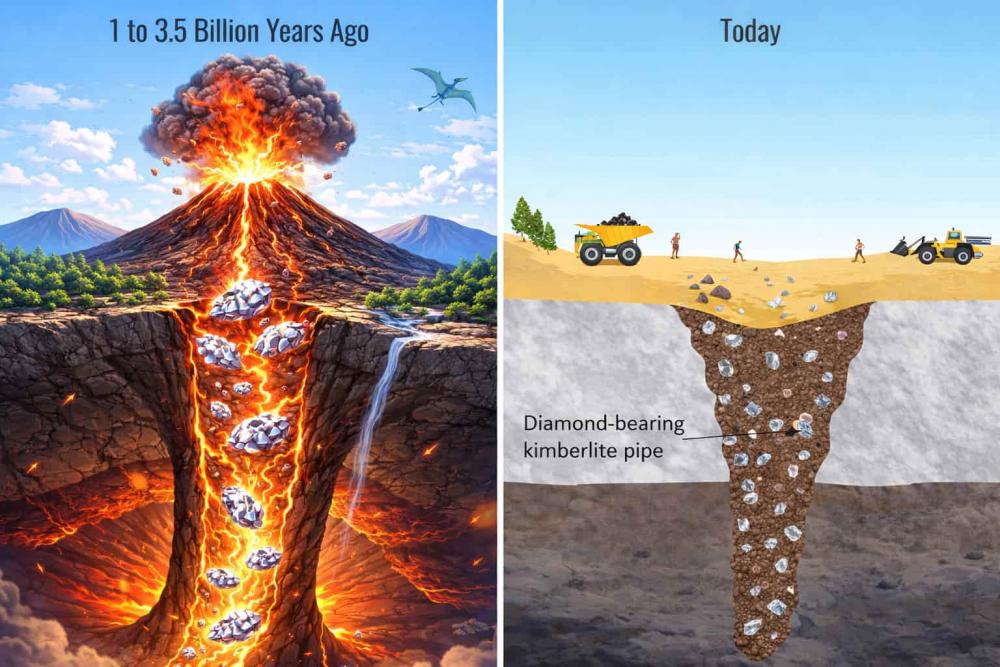
If the diamonds form so deep inside the Earth, how do they reach the surface? It would’ve been impossible for our ancestors to find them by digging so deeply. Doing that was next to impossible.
Diamonds reach the surface through a natural process without any human intervention. They reach the Earth's surface through rare volcanic eruptions.
These eruptions create vertical rock formations called kimberlite pipes. The magma rises quickly from deep within the mantle (the third deepest layer from the center of the Earth) and carries diamonds upward before they can melt or change into graphite.
Many famous diamond mines in countries like South Africa, Botswana, and Canada are located in ancient kimberlite pipes that formed millions of years ago.
5. Some Diamonds Come From As Deep As 800 km
Most diamonds are generally formed 200 kilometers underground, but there are some rare and special diamonds formed at even greater depths. Like, in the depths of 600 - 800 kilometers from the surface.
They’re also famously known as super-deep diamonds. Just like how the scientists were able to study their age by the mineral particles trapped inside it, they were also able to find their birthplace. These diamonds have helped researchers understand the parts of the Earth that humans cannot directly study.
6. Diamonds Are Made of Just One Element
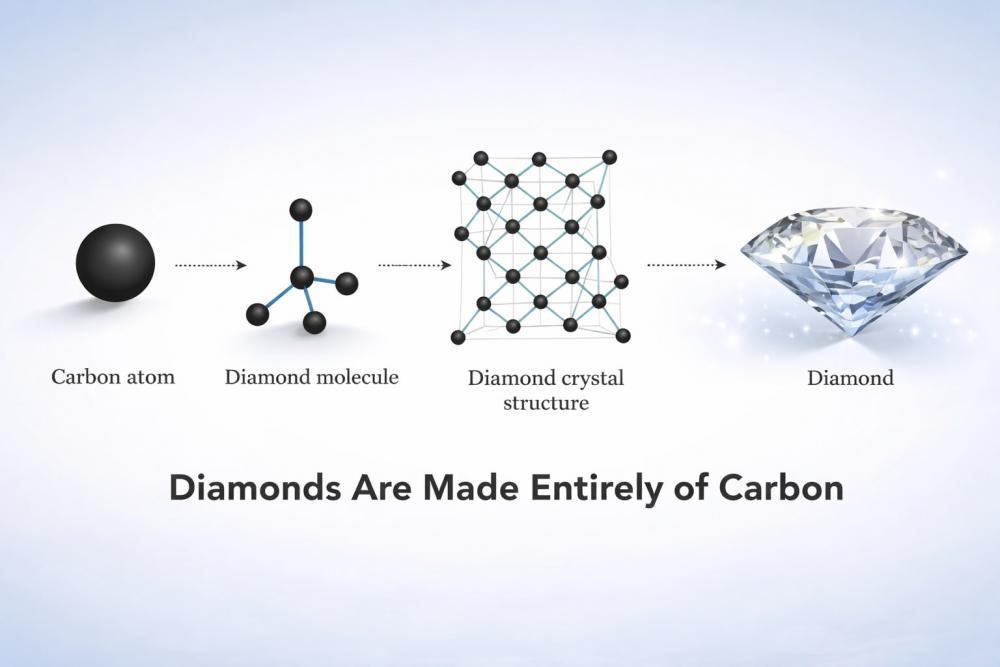
Diamonds are made entirely of carbon. What makes them special is the way the carbon atoms are arranged. Each carbon atom bonds with four other atoms in a strong crystal structure.
This arrangement forms a rigid three-dimensional network that gives diamonds their strength and brilliance. Interestingly, graphite in pencil lead is also made of carbon, but its atoms are arranged in a completely different way.
7. Diamonds Are the Hardest Natural Material on Earth
Diamonds rank 10 on the Mohs hardness scale. This scale was created in 1812 by German geologist Friedrich Mohs. So, this scale basically measures how resistant a mineral is to scratching.
Because of their hardness, diamonds can scratch almost every other natural material. This is why they are widely used in industrial cutting tools, drilling equipment, and polishing machines.
8. Diamonds Can Still Chip or Break
Even though diamonds are extremely hard, they’re not impossible to break. Hardness only measures resistance to scratching. Diamonds also have natural cleavage planes where the crystal structure is weaker.
If a strong impact occurs along these planes, the diamond can chip or fracture. For this reason, jewelers design settings that protect the edges of the diamond.
9. Rough Diamonds Often Look Like Ordinary Stones
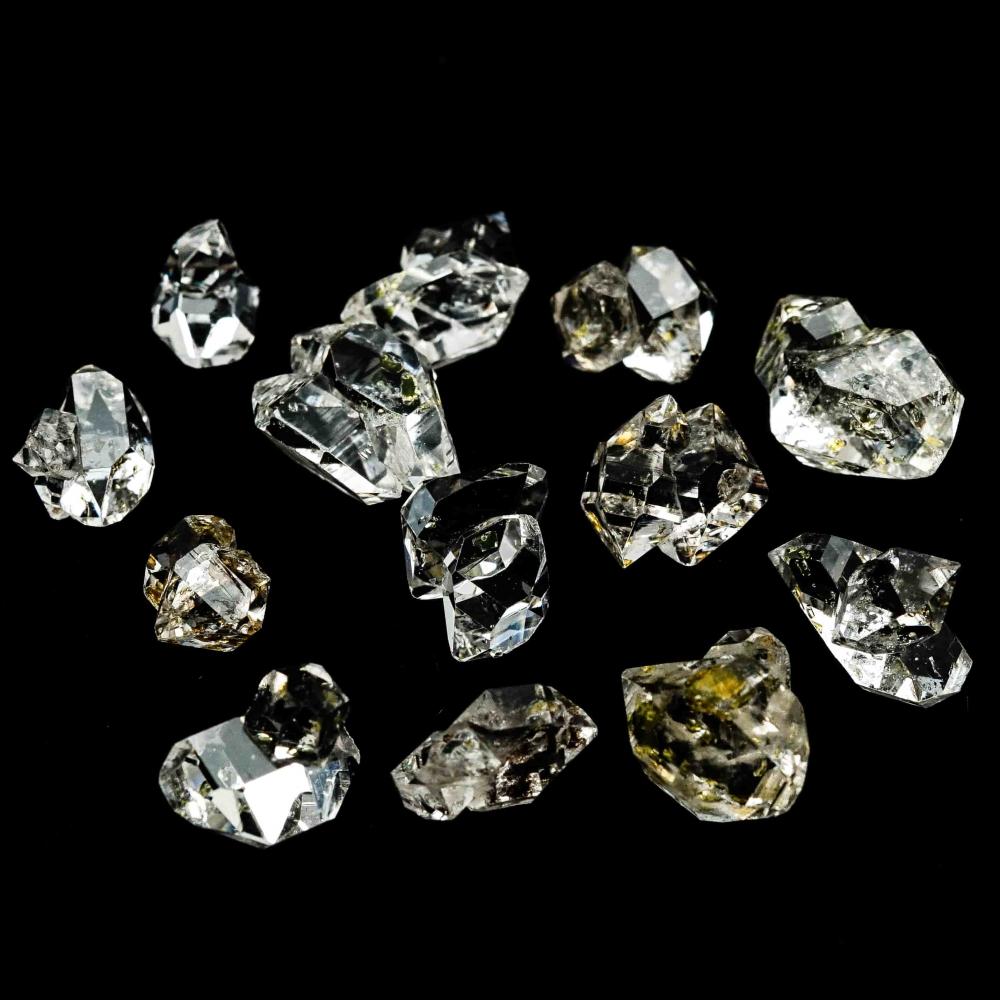
Before they are cut and polished, diamonds usually don’t look very impressive. A rough diamond often appears dull, cloudy, and similar to a regular stone.
Many natural diamonds grow in shapes such as octahedra or cubes. It takes skilled diamond cutters many hours to transform a rough diamond into the sparkling gemstone that we see in jewelry.
10. Diamonds Conduct Heat Better Than Copper
Diamonds are one of the best heat conductors known to the face of science. Their thermal conductivity can reach about 2,000 watts per meter per kelvin. That means it’s 4-5 times higher than copper (generally used for cooling electronics).
This happens because the diamond lets heat vibrations travel extremely efficiently through its structure. Because of this property, synthetic diamonds are now used in high-power lasers, semiconductor devices, and advanced computer chips to remove heat and improve performance.
11. Diamonds Naturally Occur in Many Colors
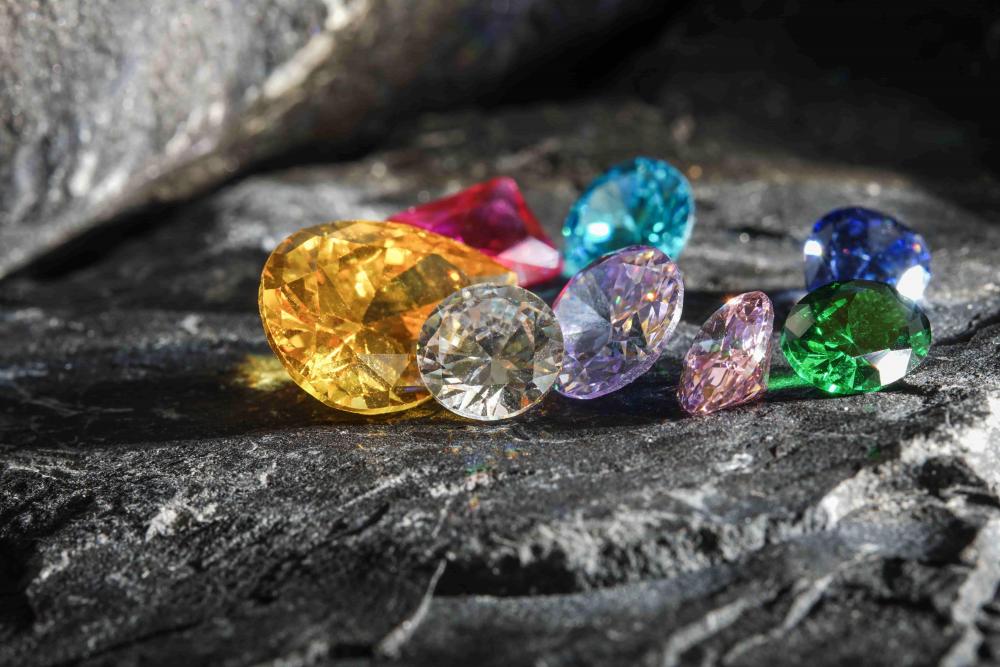
Most of us are only familiar with the colorless diamonds, but they come in a variety of colors. We’re not talking about the artificial diamonds here. They occur naturally in nature.
We can generally find them in colors like yellow, blue, pink, green, brown, and black. There are a lot of reasons for these colorful occurrences.
The most common reason is the exposure to radiation or impurities during the diamond’s formation deep inside the Earth. For example, when the diamonds are exposed to nitrogen atoms, they produce yellow diamonds. Whereas, when they come in contact with boron atoms, they produce blue diamonds.
12. Colored Diamonds Are Known as Fancy Diamonds
The Gemological Institute of America (GIA), which is one of the world’s leading gem authorities, classifies diamonds across a color scale from D (colorless) to Z (light yellow or brown).
Diamonds that display strong natural color outside the normal D to Z color scale are classified as fancy colored diamonds. The GIA uses this term to describe diamonds with different color intensities.
As the color goes farther away from the Z scale, the fancier it’s considered. So, the color intensity is graded as Fancy Light, Fancy, Fancy Intense, Fancy Vivid, or Fancy Deep.
13. Red Diamonds Are Among the Rarest Gemstones on Earth
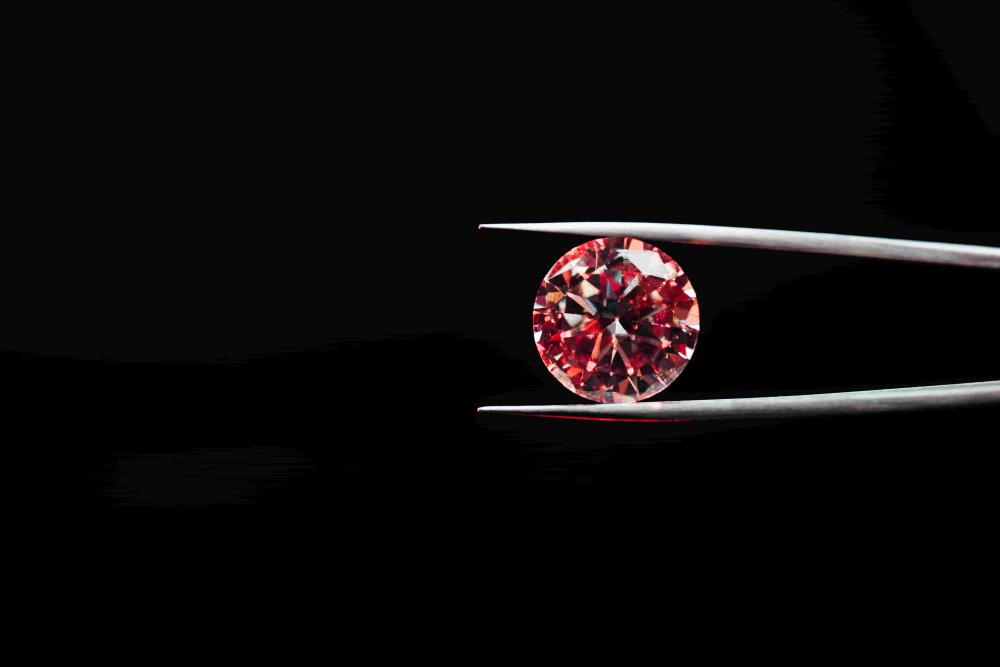
Red diamonds are considered the rarest type of diamond ever discovered by humankind. Unlike other colored diamonds, their color is not caused by chemical impurities or radiation. They’re formed by distortions in the diamond’s crystal structure during formation.
Only a few dozen true red diamonds are known to exist across the globe. One of the most famous is the Moussaieff Red Diamond, which weighs 5.11 carats and was discovered in Brazil in the 1990s.
Because of their rarity, red diamonds can sell for more than one million dollars per carat.
14. Some Diamonds Glow Under UV Light

About 25-35% of natural diamonds exhibit a property called fluorescence. When exposed to ultraviolet light, these diamonds emit a visible glow, most commonly blue.
This effect occurs because trace elements such as nitrogen inside the diamond absorb ultraviolet radiation and re-emit it as visible light. The phenomenon was first studied extensively by gemologists at the GIA, who use ultraviolet lamps to help identify and classify diamonds.
15. The Hope Diamond Glows Red Under UV Light
The Hope Diamond, one of the most famous gemstones in the world, displays an unusual optical effect called phosphorescence. When exposed to ultraviolet light, the diamond glows bright red and continues glowing for several seconds after the light source is removed.
This rare property helped scientists at the Smithsonian National Museum of Natural History in Washington, D.C. study the diamond’s internal structure.
The Hope Diamond weighs 45.52 carats and is believed to have originated from the Golconda mines of India in the 17th century.
16. Only About 20% of Mined Diamonds Are Gem Quality
Although millions of carats of diamonds are mined every year, only about 20% are considered gem quality. Gem-quality diamonds must meet strict standards for clarity, color, size, and transparency to be suitable for jewelry.
The remaining 80% of diamonds are classified as industrial diamonds and are used for drilling, cutting, grinding, and polishing tools. This rarity is one reason why high-quality diamonds are considered valuable gemstones.
17. Diamonds Are Mined in More Than 25 Countries
Diamonds are mined in more than 25 countries around the world, but most of the global supply comes from a few key regions. Major producers include Russia, Botswana, Canada, South Africa, Angola, and Australia.
According to industry data, Russia is currently the world’s largest diamond producer by volume, largely due to the operations of the mining company Alrosa, while Botswana produces some of the world’s highest value diamonds.
18. Some Diamonds Are Mined From the Ocean Floor

One of the most unusual forms of diamond mining takes place off the coast of Namibia in southwestern Africa. Millions of years ago, diamonds were carried from inland mines by the Orange River and deposited along the Atlantic coastline.
Today, mining companies use specialized ships equipped with large underwater crawlers to vacuum diamond-rich gravel from the seabed. These marine mining operations can collect diamonds from depths of about 120 to 140 meters underwater.
19. India was the First Known Source of diamonds.

India is considered the earliest known source of diamonds in the world. It was certainly believed that these diamonds were first discovered around 300 BCE in regions near the Krishna and Godavari rivers.
For many centuries, India remained the only major supplier of diamonds before they started to be discovered in various other parts of the world.
Famous historic diamonds like the Koh-i-Noor and the Hope Diamond are believed to have come from the Golconda (located in modern-day Telangana, India), which was known for producing some of the finest diamonds ever found.
20. The Word Diamond Comes From the Greek Word Adamas
The word diamond comes from the Greek word Adamas, which means unbreakable or invincible. This name reflects the incredible hardness of diamonds, which are the hardest natural material found on Earth.
The term Adamas was used by ancient Greeks to describe materials that could not be conquered or destroyed, making it a perfect name for diamonds.
21. Ancient Civilizations Believed Diamonds Had Magical Powers
In ancient times, diamonds were believed to have special powers. The Greeks thought diamonds were tears of the gods, while the Romans believed they were fragments of fallen stars.
During the Middle Ages in Europe, diamonds were even used as a form of medicine. People believed that holding or wearing a diamond could cure illnesses and bring strength and protection.
22. The Famous Slogan A Diamond Is Forever Was Created in 1947
The phrase A Diamond Is Forever was first used in 1947 by the advertising agency N W Ayer for the diamond company De Beers. The slogan was written by copywriter Frances Gerety. It happened to be one of the most successful advertising campaigns in history.
The core idea behind the slogan was that diamonds symbolize eternal love. You can say this was the sole reason why diamond engagement rings became so widely popular in the 20th century.
23. The Largest Rough Diamond Ever Discovered Weighed 3,106 Carats
You might know the most famous diamond named Cullian. But why do you think it’s so famous?
It’s the largest rough diamond ever found in the world yet. This diamond was discovered in South Africa in the year 1905 at the Premier Mine. It’s weighed at an incredible 600 grams, 3106 carats.
The discovery of the Cullinan diamond has remained one of the most important events in diamond history due to the sheer size and quality this stone holds.
24. It Was Called the Cullinan Diamond
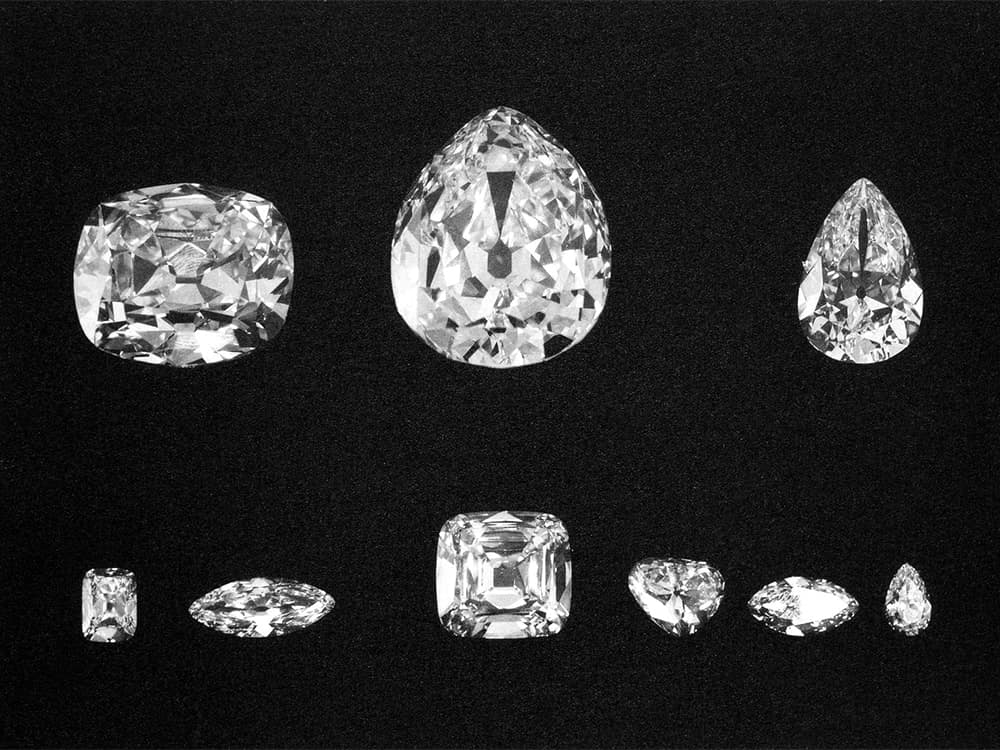
This huge diamond was named after Sir Thomas Cullinan, the owner of the mine (Premier Mine) where it was discovered. After its discovery, the stone was taken to King Edward VII of the United Kingdom.
The king then arranged for the diamond to be cut into multiple smaller stones by the famous diamond cutting company Asscher Brothers in Amsterdam.
25. The Largest Piece Became the Great Star of Africa
When the diamond was cut into multiple pieces by the Asscher Brothers, they let one piece be the largest among all. Later, this piece came to be known as the Great Star of Africa, Cullinan I.
The piece is the largest clear-cut diamond in the world. It weighs 530.2 carats (i.e., around 17% of the total weight of the Cullian diamond).
Today, it is set in the Sovereign’s Sceptre and is part of the British Crown Jewels, which are kept in the Tower of London.
26. Diamonds Have Been Found Inside Meteorites
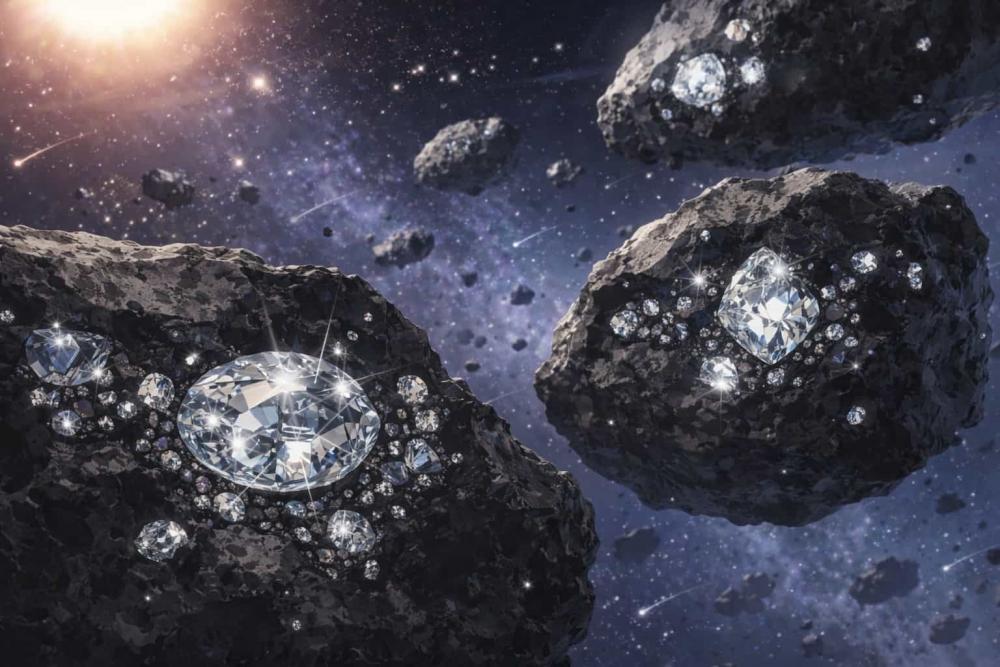
Scientists have discovered tiny diamonds inside meteorites that have fallen to Earth. These diamonds are usually microscopic and are believed to have formed under intense pressure during asteroid collisions in space.
Some of these diamonds are thought to be older than the Earth itself, giving scientists clues about the early solar system.
27. Some Planets May Contain Massive Amounts of Diamond
Astronomers strongly believe that certain planets out there may contain huge amounts of diamond. One well-known example they gave was the exoplanet 55 Cancri e. This planet is apparently located about 40 light-years away from Earth.
It’s believed that a large part of this planet is possibly made of carbon-rich material, including diamond. If true, it could be one of the most valuable planets ever discovered.
But, assuming this planet was easily accessible to humankind, do you still believe the diamonds to be so valuable as they are today?
Final Words
After going through all these facts, one thing becomes clear. A diamond holds a lot of stories within it.
It has existed for billions of years, survived extreme conditions deep inside the Earth, and somehow made its way to you. When you pause for a second and really think about that journey, it feels quite incredible.
We usually wear diamonds during special moments in life. But understanding where they come from and what they have been through adds a different kind of meaning to them.
We hope the next time you look at a diamond, you might start seeing the stories behind it and appreciate it a little more.
If you find this article interesting, you might want to look at our other articles too.
Interested in a real, natural diamond? You can browse our certified diamond collection.