
Diamond Cut vs Shape Explained: A Complete Buying Guide
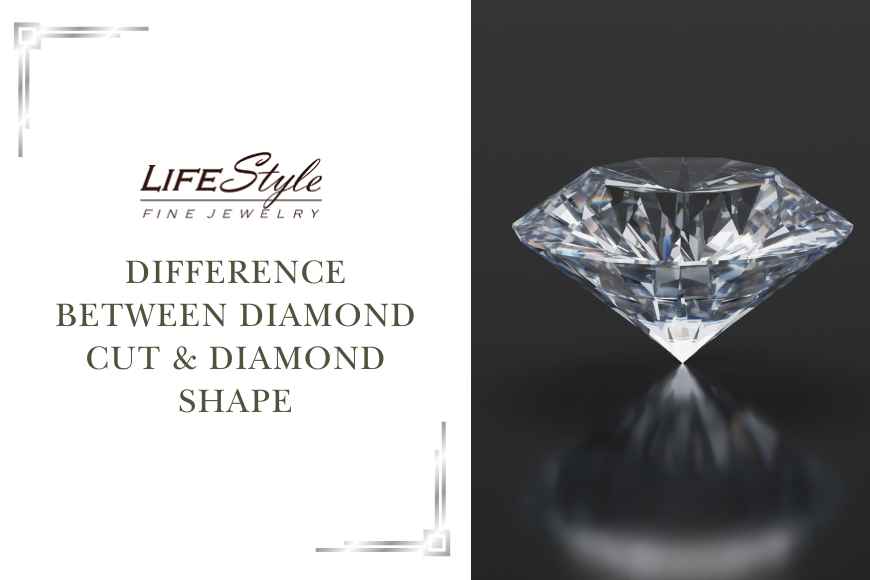
Types of diamond cuts and diamond shapes get mixed up all the time, and honestly, it is easy to see why. You walk into a store, the person behind the counter says something like "this one has a great cut" and then points at an oval stone, and your brain just short-circuits.
This confusion is not just annoying; it can actually cost you. Pick the wrong one, and you might end up paying more for less shine, or choosing a shape that does not even suit the ring you had in mind.
In this blog, we will break down what cut actually means, what shape means, how they are different, and how to use both to pick a diamond you will be happy with for years.
What is a Diamond Cut and What is a Diamond Shape (Quick Definitions)
Let us keep this simple.
A diamond cut is about how well the stone has been shaped and polished so it can catch and bounce light. Think of it as the craftsmanship part. A good cut means the diamond looks bright and lively. A poor cut, even on an expensive stone, can make it look dull and flat.

A diamond shape is just the outer form you see when you look at the stone. Round, oval, pear, these are all shapes. Shape is about looks; cut is about quality. Once you keep this one line in your head, the rest of this blog will make a lot more sense. Let us go a little deeper into how these two are different in practice.
So What is the Actual Difference Between Diamond Cut and Shape
Most people assume cut and shape are just two words for the same thing, and that is exactly where the mix-up begins. Here is the simple way to remember it.
Two diamonds can have the exact same shape, say both are round, but one can have a much better cut than the other. That is why one round diamond can look far more lively than another round diamond sitting right next to it, even if they are the same size.
|
Cut |
Shape |
|
|
What it tells you |
How good a job the cutter did while shaping the stone |
What the diamond looks like from above |
|
What it affects |
How much light it reflects back to your eye |
Your personal taste and ring style |
|
How it is judged |
Graded on a scale, from excellent down to poor |
Not graded, simply a choice |
|
What you should do |
Check this to make sure the diamond performs well |
Pick this based on what you like |
In short, shape is what you pick based on your taste, and cut is what you check to make sure the diamond actually performs well once it is picked. Now that this difference is clear, let us look at the actual types of diamond cuts you will come across while shopping, and what each one means for how the diamond looks and what it costs.
Types of Diamond Cuts and How Each One Affects Value
When jewelers talk about types of diamond cuts, they usually mean the grade given to how well the diamond has been shaped to catch light. Here are the main ones you will see, from the best to the lowest.
-
Excellent cut: reflects the most light and looks the brightest, usually costs more because of it.
-
Very good cut: close behind excellent, still bright, but slightly more affordable.
-
Good cut: still looks nice to the eye but may not catch light quite as well at certain angles.
-
Fair cut: starts to lose some of that liveliness; light tends to leak out from the bottom instead of bouncing back up.
-
Poor cut: the lowest grade; the stone often looks dull no matter how good the shape or size is.
A helpful way to think about types of diamond cuts is this: a smaller diamond with an excellent cut can often look better than a bigger diamond with a poor one.
This is one of the most useful things to know before you buy, since many buyers only look at size and forget to ask about the cut grade at all. Now let us move to the part most people enjoy the most, choosing an actual shape.
The Most Popular Diamond Shapes and What Each One is Best For
Now that the types of diamond cuts are clear, let us talk shapes, since this is usually where the fun begins.
-
Round: the most popular shape by far, works well for almost anyone since it goes with pretty much any ring style.
-
Oval: gives a similar brightness to round but looks a bit longer on the finger, which some people really love.
-
Cushion: soft, rounded corners, gives a slightly vintage feel, good for someone who wants a classic look.
-
Emerald cut: long, clean lines with a bit of an open look, suits someone who prefers a calm and clear stone over a very flashy one.
-
Princess: square-shaped with sharp corners, works well for a more modern look.
-
Pear: shaped like a teardrop, often chosen by people who want something a little different from the usual round or oval.
-
Asscher: looks similar to emerald cut, but more square, and shows off a slightly more geometric pattern inside the stone.
Since asscher and emerald cut get confused so often, here is a quick side-by-side.
|
Asscher |
Emerald cut |
|
|
Outer form |
More square |
More rectangular |
|
Pattern inside the stone |
More geometric |
Long, clean lines |
|
Best for |
A classic look with a modern edge |
A calm, clear look |
Cut vs Shape: Which One Should You Prioritize When Buying a Diamond
Here is a simple way to decide between the two.
-
If your main goal is brightness for your budget: focus more on cut, since this is what actually controls how lively the diamond looks.
-
If you already have a clear picture of the look you want: focus more on shape first, then pick the best cut you can afford within that shape.
-
If you are picking a diamond shape for an engagement ring: give shape extra weight, since the ring is worn every day and needs to match the person's style just as much as the stone needs to shine.
A good rule of thumb: never let go of cut quality just to save a little money, but feel free to explore different shapes until one feels right. Think of cut as the non-negotiable part and shape as the fun, personal part of the decision.
Conclusion
Picking a diamond does not have to feel confusing once you know what you are actually looking at. Types of diamond cuts decide how much life and brightness the stone has, and shape decides how it looks and fits your personal style.
Once you keep these two separate in your head, shopping becomes a lot easier and a lot more enjoyable too. Take your time, compare a few cuts and shapes side by side if you can, and pick the one that feels right for you or for the person you are buying it for.
A diamond is something that sticks around for a long time, so it is worth getting both the cut and the shape right from the start. And if you are ready to see some real options, our collection has plenty of choices to help you find that perfect stone.