Diamond Carat vs Size: Why a Higher Carat Doesn't Always Look Bigger
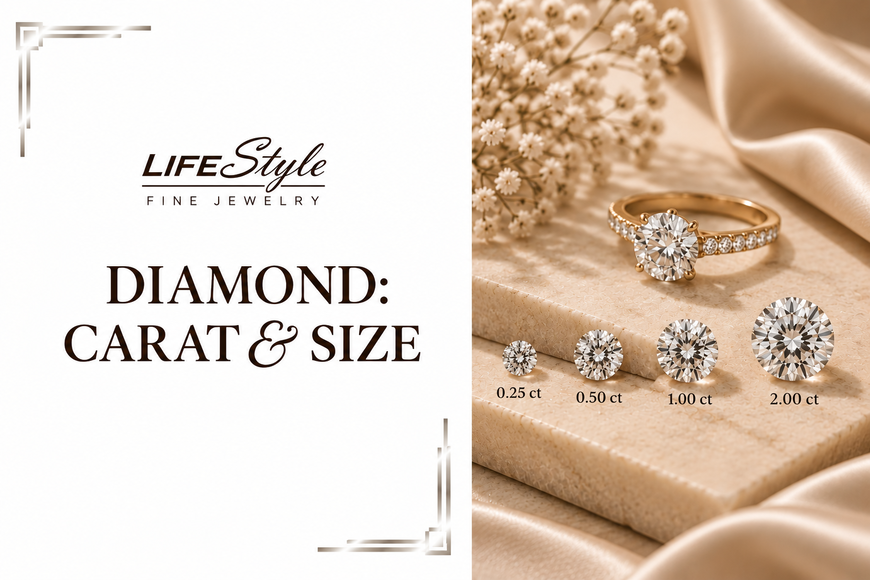
When shopping for a diamond, carat weight is one of the first things people look at. A larger carat number may seem like an obvious choice when you're looking for a bigger-looking diamond.
But here's the interesting part: carat and visual size aren't the same thing.
Two diamonds with the same carat weight can look noticeably different when viewed from above. Conversely, a diamond with a lower carat weight can sometimes appear larger than a heavier diamond.
So, what determines how big a diamond actually looks?
Let's break it down.
What Is Diamond Carat?
Carat refers to the weight of a diamond, not its physical size.
One carat equals 200 milligrams, and each carat can be divided into 100 points. For example, a 0.50-carat diamond weighs half a carat, while a 1.00-carat diamond weighs one carat.
Carat weight is important when comparing diamonds, but it shouldn't be considered on its own when judging how large a diamond will appear.
The diamond's cut, shape and proportions also contribute to its visual appearance.
Is Diamond Carat the Same as Diamond Size?
No.
Carat = weight.
Size = physical dimensions and how large the diamond appears.
A diamond's measurements are generally expressed in millimetres, such as length, width and depth.
This means two diamonds with identical carat weights can have different dimensions and therefore create different visual impressions.
When comparing diamonds, it's useful to look beyond the carat number and consider the stone's actual measurements.
Why Two Diamonds With the Same Carat Can Look Different
Several factors can influence how large a diamond appears.
Diamond Cut
Cut affects how a diamond's facets interact with light and how its proportions are balanced.
A well-cut diamond can appear bright and lively, which may contribute to a stronger visual presence.
Cut shouldn't be confused with diamond shape. Shape describes the diamond's outline, while cut relates to how the stone has been fashioned and how effectively it handles light.
Diamond Shape
Different shapes distribute their weight differently.
An elongated shape, for example, may have a larger-looking surface area when viewed from above than a more compact shape of similar weight.
That's one reason carat weight alone isn't enough to predict visual size.
Proportions and Dimensions
Length, width and depth all influence a diamond's appearance.
Two stones with the same weight can have different proportions, meaning one may look larger or smaller when viewed from above.
Looking at the diamond's measurements alongside its carat weight can therefore give you a better idea of its actual dimensions.
Setting and Mounting
The jewelry setting can also influence the overall impression.
A halo of smaller diamonds surrounding a center stone, for example, can make the center diamond appear more prominent. Other settings may emphasize the stone's outline or leave more of it exposed.
The setting should therefore be considered alongside the diamond itself.
How Diamond Shapes Affect Visual Size
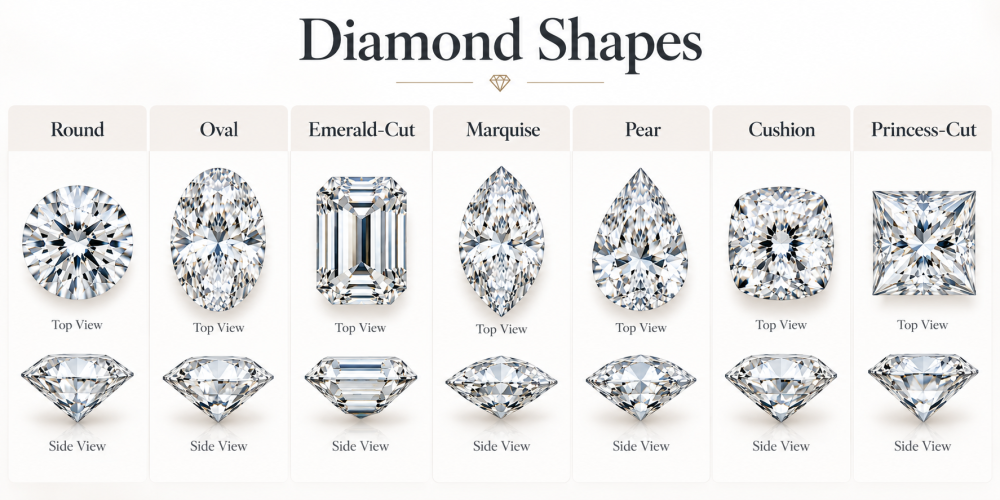
When comparing diamonds, shape is an important factor in how large a stone appears from the top. Elongated shapes such as oval, marquise and pear can offer greater visual coverage because of their length, while round, cushion and princess-cut diamonds have more compact outlines. Emerald-cut diamonds have a distinctive rectangular shape with broad, open facets that create a different visual effect. Understanding these differences can help you compare diamonds beyond carat weight and choose a shape that matches the look you prefer. Shape can have a noticeable impact on how large a diamond appears.
Round Diamonds
Round diamonds have a classic appearance and are among the most popular diamond shapes. Their balanced proportions make them a versatile choice for many jewelry designs.
Oval Diamonds
Oval diamonds have an elongated outline that can create the impression of greater surface coverage.
They can also have a flattering effect when used in rings because their elongated shape can visually extend the finger.
Emerald-Cut Diamonds
Emerald-cut diamonds have a rectangular outline and large, open facets.
Rather than focusing primarily on intense sparkle, their appeal often comes from their clean lines and elegant, hall-of-mirrors appearance.
Marquise Diamonds
The long, narrow shape of a marquise diamond can create considerable visual coverage relative to its weight.
Its pointed ends also give it a distinctive silhouette.
Pear-Shaped Diamonds
Pear-shaped diamonds combine rounded and pointed ends, creating an elongated appearance.
Their distinctive shape can make them an interesting option for someone looking for something beyond traditional round diamonds.
Cushion Diamonds
Cushion diamonds typically have rounded corners and a softer outline.
Depending on their proportions, some cushion diamonds can appear more compact than elongated shapes of a similar weight.
Princess-Cut Diamonds
Princess-cut diamonds have a square or rectangular outline and are known for their sharp, modern appearance.
Their geometric shape makes them particularly suited to contemporary jewelry designs.
Does a Higher Carat Diamond Always Look Bigger?
Not necessarily.
A higher carat diamond weighs more, but its dimensions and proportions determine how much of that weight is visible from above.
For example, an elongated diamond with a lower carat weight may have a larger-looking surface area than a deeper diamond with a higher carat weight.
That's why it's useful to compare:
Carat weight + measurements + shape + cut
rather than looking at carat weight alone.
Diamond Carat vs Face-Up Size
"Face-up size" refers to how large a diamond appears when viewed from above.
This is particularly useful when comparing stones because it's the perspective most people see when looking at a diamond set in jewelry.
When shopping, compare the diamond's length and width in millimetres as well as its carat weight.
A diamond that has a strong combination of dimensions and proportions can provide the visual presence you're looking for without automatically choosing the highest available carat weight.
How to Choose a Diamond That Looks Bigger
|
Factor |
What to look for |
How It Helps the Diamond Look Bigger |
|
Diamond Shape |
Oval, marquise or pear |
Elongated shapes can offer greater visual coverage across the finger. |
|
Diamond Measurements |
Compare length and width, not just carat |
Helps you understand the diamond's actual face-up size. |
|
Cut |
Well-proportioned, well-cut diamond |
Can improve brightness and make the diamond appear more visually striking. |
|
Setting |
Choose a setting that complements the center stine |
Certain settings can enhance the overall presence of the diamond. |
|
Halo Design |
Smaller diamonds surrounding the center stone |
Adds sparkle and creates a larger overall visual impact. |
Should You Prioritize Carat or Cut?
The answer depends on your priorities.
If your main goal is a particular carat weight, you may want to start there and then compare stones based on their cut, shape and measurements.
If visual appearance is more important than the number on the certificate, it can make sense to consider cut, dimensions and shape alongside carat weight.
The best diamond isn't necessarily the one with the highest carat weight. It's the one that offers the combination of appearance, quality and characteristics that matter most to you.
How Diamond Settings Can Enhance Visual Size
The setting is an important part of the final appearance of diamond jewelry.
A halo setting can surround the center diamond with smaller stones, creating additional sparkle and a more prominent overall design.
A prong setting can leave more of the center stone visible, keeping attention focused directly on the diamond.
The right setting therefore depends not only on the diamond's size but also on the style you want the finished jewelry to achieve.
Finding the Right Diamond for Your Budget and Style
Choosing a diamond doesn't have to mean simply choosing the largest carat available.
Start by deciding what matters most to you — visual size, sparkle, shape, design or overall style. Then compare diamonds based on several characteristics rather than relying on carat weight alone.
A thoughtfully selected diamond can provide the appearance you want while fitting comfortably within your preferences and budget.
Explore LifeStyle GCC's diamond jewelry collection to find a diamond design that suits your style.
FAQs
Is diamond carat the same as the size?
No. Carat measures a diamond's weight, while its physical dimensions and proportions influence how large it looks.
Can a smaller-carat diamond look bigger?
Yes. A diamond with a lower carat weight can sometimes appear larger from above because of its shape, dimensions and proportions.
Which diamond shape looks the biggest?
Elongated shapes such as oval, marquise and pear can often provide substantial visual coverage relative to their carat weight.
Does cut affect how big a diamond looks?
Yes. Cut influences a diamond's proportions and appearance, while also affecting how effectively it interacts with light.
Should I choose carat or cut first?
Consider both. Carat determines weight, while cut, shape and proportions contribute significantly to the diamond's overall appearance.
Can the setting make a diamond look bigger?
Yes. Certain settings, particularly halo designs, can make the center diamond appear more prominent by surrounding it with additional stones.